Recovery & healing
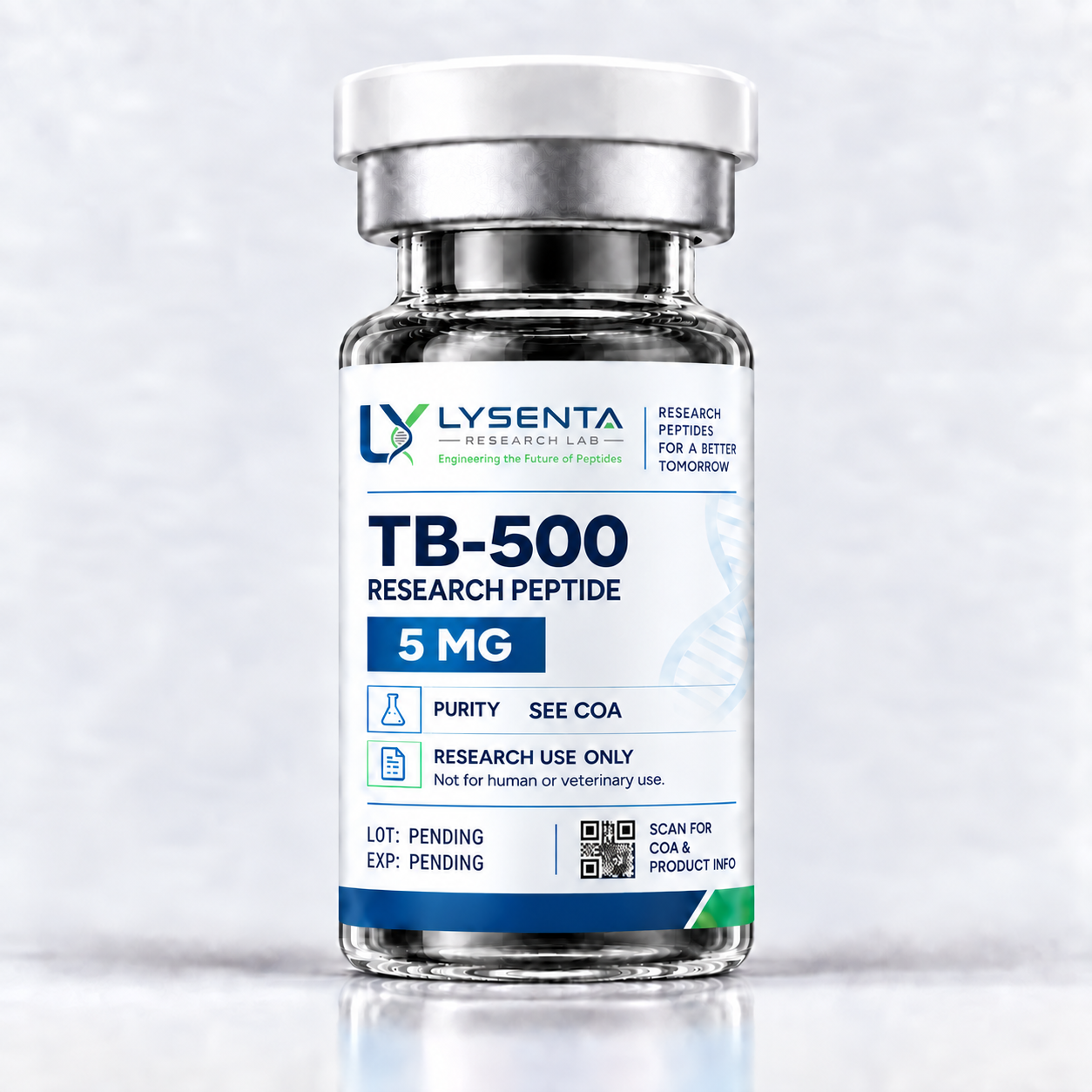
TB-500 (Thymosin Beta-4)
TB-500 research material is available in 5mg, 10mg. Select the required specification below. The displayed amount is the price per vial; orders start at 10 vials and increase in multiples of 10.


The public COA is shown in English and kept in its original laboratory form. Internal self-inspection COAs are private.
Recovery & healing
TB-500 research material is available in 5mg, 10mg. Select the required specification below. The displayed amount is the price per vial; orders start at 10 vials and increase in multiples of 10.
LYSENTA research catalogue
Description
TB-500 research material is available in 5mg, 10mg. Select the required specification below. The displayed amount is the price per vial; orders start at 10 vials and increase in multiples of 10.
Supplied strictly as laboratory research material. Record the selected SKU, batch and COA in the research workflow.
Frequently asked questions
The displayed price is per vial. The spreadsheet box price has been divided by 10 without changing its total: selecting 10 vials equals one full box.
The minimum is 10 vials, and every additional quantity must be a multiple of 10.
When available, the public English COA is linked to the selected specification. Internal self-inspection COAs remain private in the administration area.
This material is supplied strictly for laboratory and research use and is not intended for human or animal use.
RESEARCH & QUALITY DOCUMENTATION
Content updated · English reference edition
TB-500 naming requires particular care. Publications and commercial listings may use related thymosin beta-4 terminology without describing the same molecular form. Before interpreting biological claims, establish whether the referenced work concerns full-length thymosin beta-4 or a defined fragment. The catalogue name alone is not sufficient to settle that question for an individual batch.
Analytical LC-MS study — specified fragment and equine samples
A 2012 liquid-chromatography/mass-spectrometry study by Ho and colleagues investigated TB-500 as a synthetic version of an active region of thymosin beta-4 in equine samples. This is analytical research involving a specified peptide form, not clinical evidence of an injury treatment. Findings about that form must not be attributed automatically to full-length thymosin beta-4, or vice versa.
Reference: Ho et al., 2012 — LC-MS analysis of TB-500 and related metabolites ↗
Confirm the actual sequence or identity assignment and the corresponding mass information before deciding which literature applies. Do not assume a fragment and the full-length parent have identical properties. If the supplied documents do not resolve the molecular form, request clarification from support before selecting it for an experiment.
A TB-500 document review should start with identity, not with a headline purity number. Match the selected SKU and supplied lot, identify what molecule was tested, and then examine the analytical method and result. The linked literature is provided to explain the naming issue, not to certify the molecular form of every product carrying this name.

Do not assume so. The terminology has been used for different molecular forms. Confirm the actual identity in the batch documentation before choosing which research is relevant.
Not without supporting evidence. Different sequences are different materials, and analytical or biological results should remain associated with the exact compound studied.
Ask support for the exact molecular form and supporting identity information. A purity percentage alone does not resolve whether the material is a fragment or the full-length parent.
Sources describe the materials and conditions studied by their authors. They are not endorsements of LYSENTA or certificates for the products on this website.
Related does not mean interchangeable. Check composition and evidence separately.
Browse all research and documentation guides →
For laboratory research only. Not for human or animal use. No clinical dosing, treatment or administration advice is provided.