Skin & pigmentation
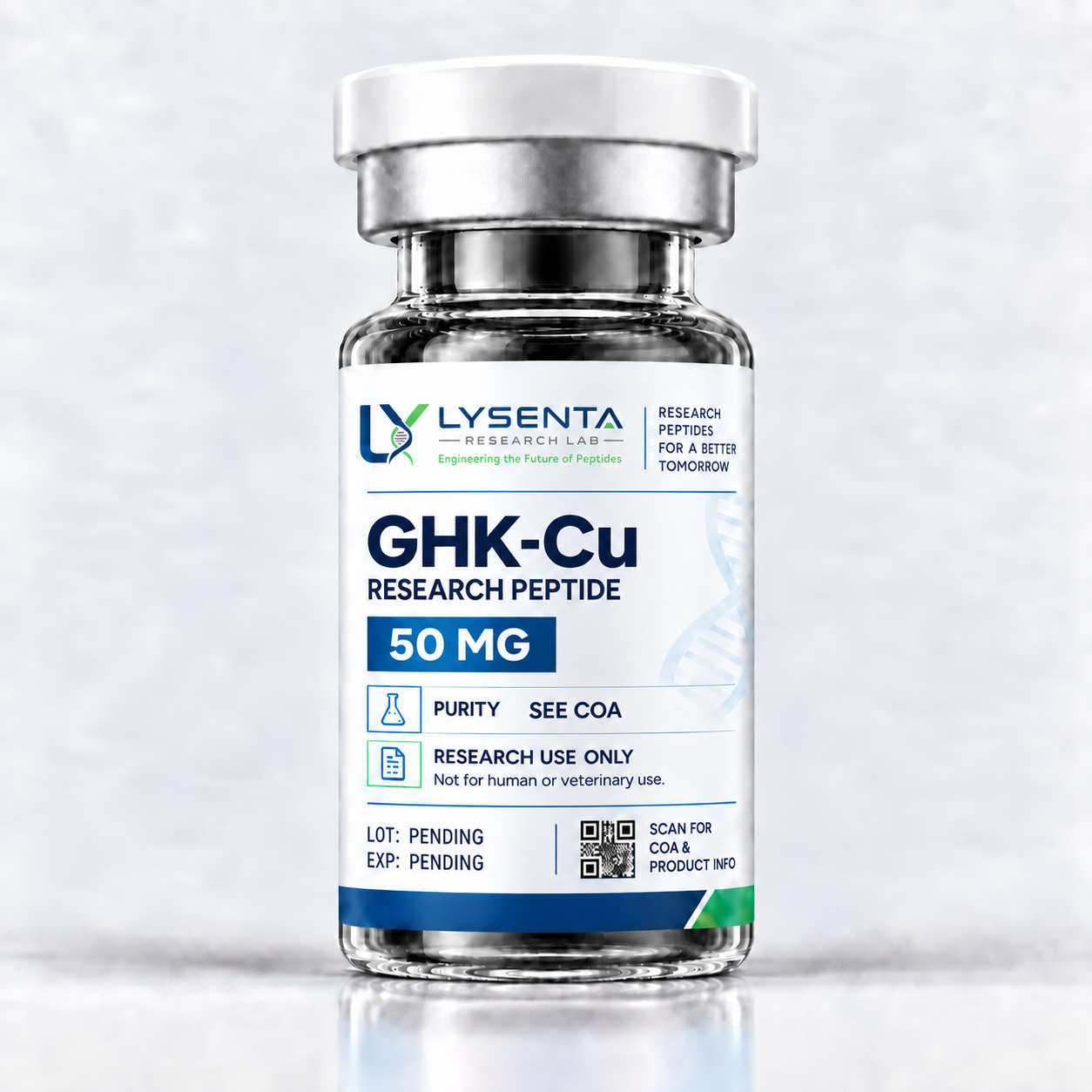
GHK-Cu (Copper Peptide)
GHK-Cu research material is available in 50mg, 100mg. Select the required specification below. The displayed amount is the price per vial; orders start at 10 vials and increase in multiples of 10.


The public COA is shown in English and kept in its original laboratory form. Internal self-inspection COAs are private.
Skin & pigmentation
GHK-Cu research material is available in 50mg, 100mg. Select the required specification below. The displayed amount is the price per vial; orders start at 10 vials and increase in multiples of 10.
LYSENTA research catalogue
Description
GHK-Cu research material is available in 50mg, 100mg. Select the required specification below. The displayed amount is the price per vial; orders start at 10 vials and increase in multiples of 10.
Supplied strictly as laboratory research material. Record the selected SKU, batch and COA in the research workflow.
Frequently asked questions
The displayed price is per vial. The spreadsheet box price has been divided by 10 without changing its total: selecting 10 vials equals one full box.
The minimum is 10 vials, and every additional quantity must be a multiple of 10.
When available, the public English COA is linked to the selected specification. Internal self-inspection COAs remain private in the administration area.
This material is supplied strictly for laboratory and research use and is not intended for human or animal use.
RESEARCH & QUALITY DOCUMENTATION
Content updated · English reference edition
GHK-Cu refers to the copper complex of the tripeptide glycyl-L-histidyl-L-lysine. Copper coordination is part of its identity, so the uncomplexed peptide GHK and a different copper peptide should not be treated as equivalent materials. Researchers investigating extracellular-matrix biology can use this page to connect the available catalogue specifications with a clearly identified starting reference.
In vitro study — collagen synthesis in fibroblast cultures
Maquart and colleagues examined collagen synthesis in fibroblast cultures in a 1988 laboratory study of GHK-Cu. The investigators reported a response in that experimental system. This is cell-culture evidence, not proof that a research product provides a cosmetic result or treats a condition in people. Interpretation depends on the material, model and measurements used in the experiment; the paper does not certify a commercial batch.
Reference: Maquart et al., 1988 — GHK-Cu in fibroblast cultures (FEBS Letters) ↗
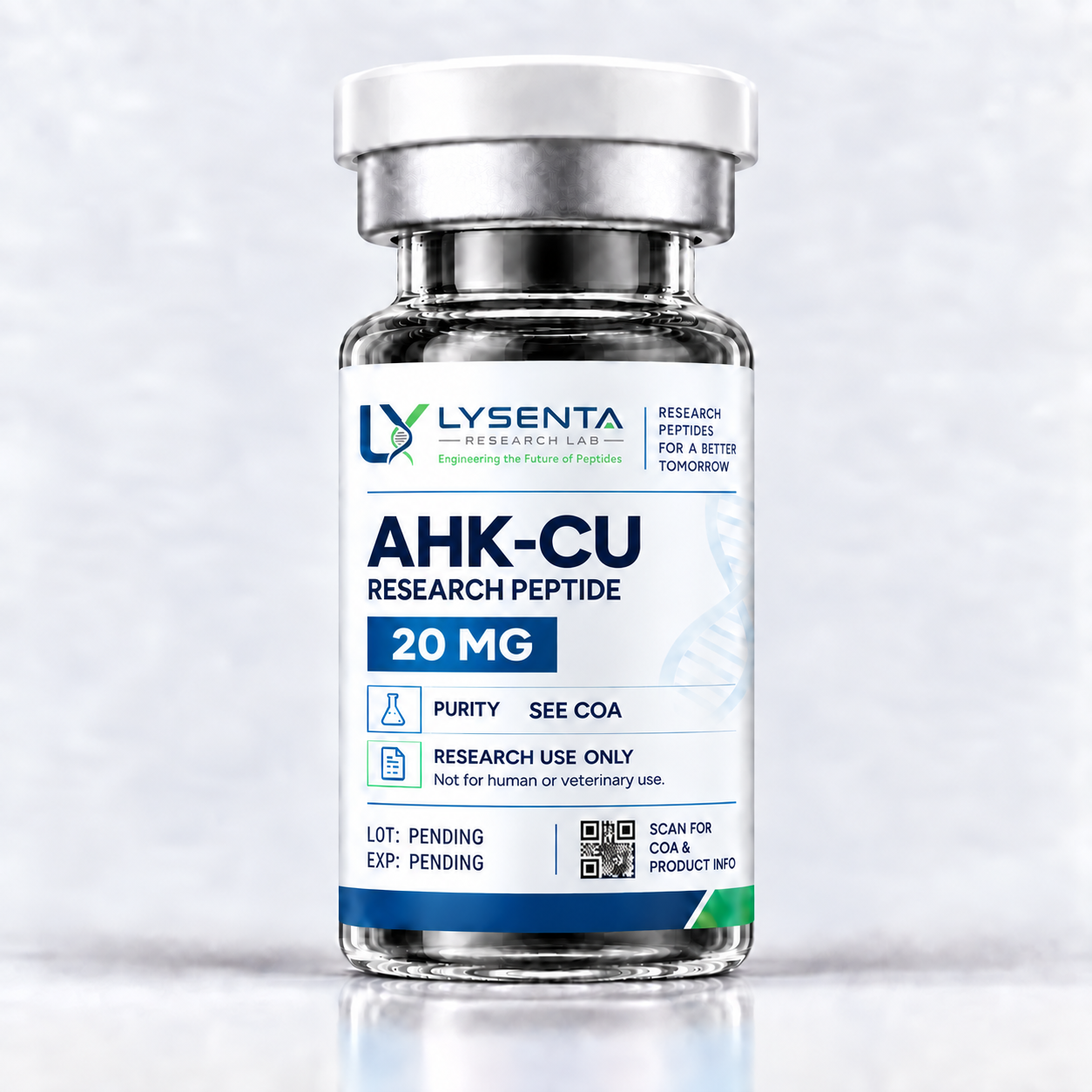
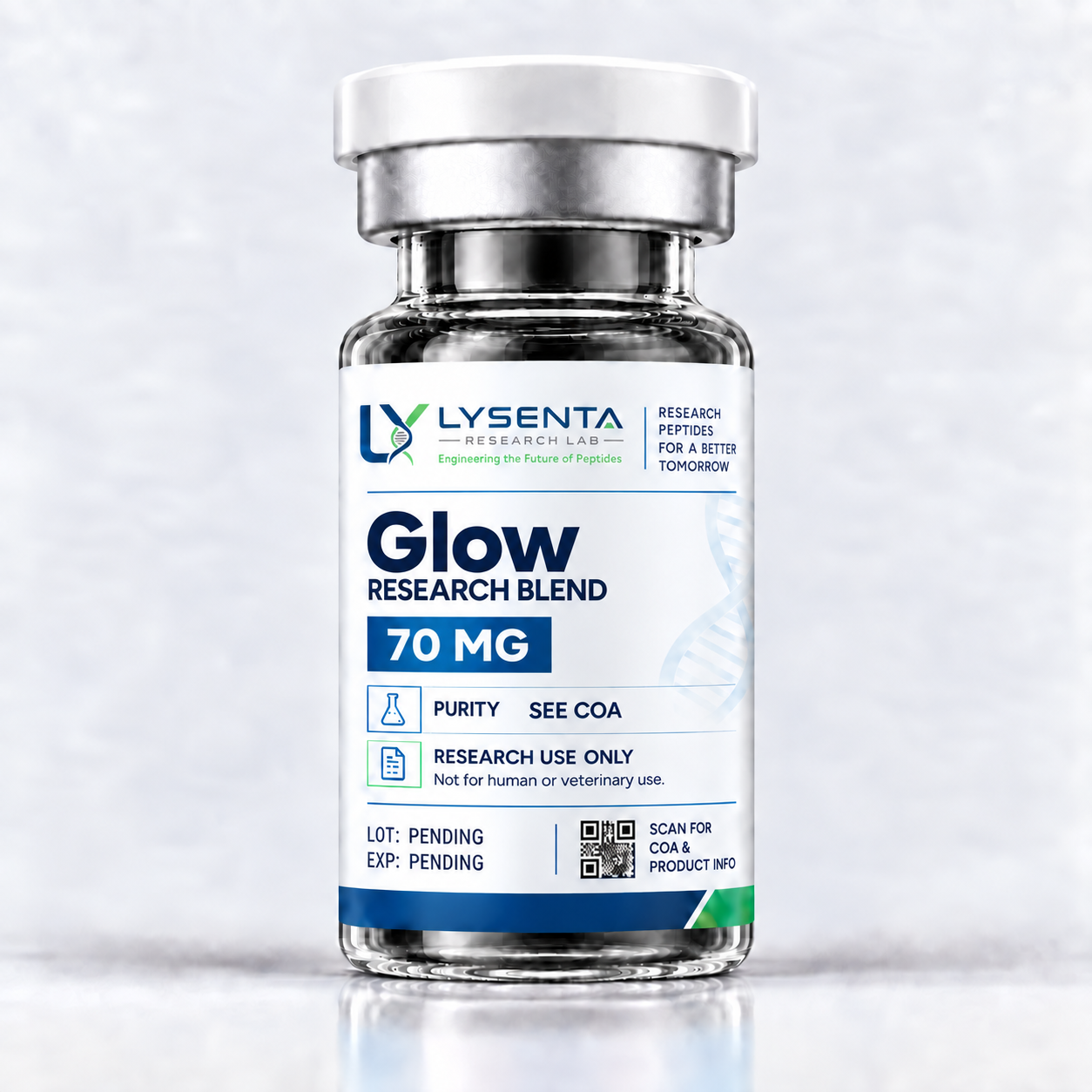
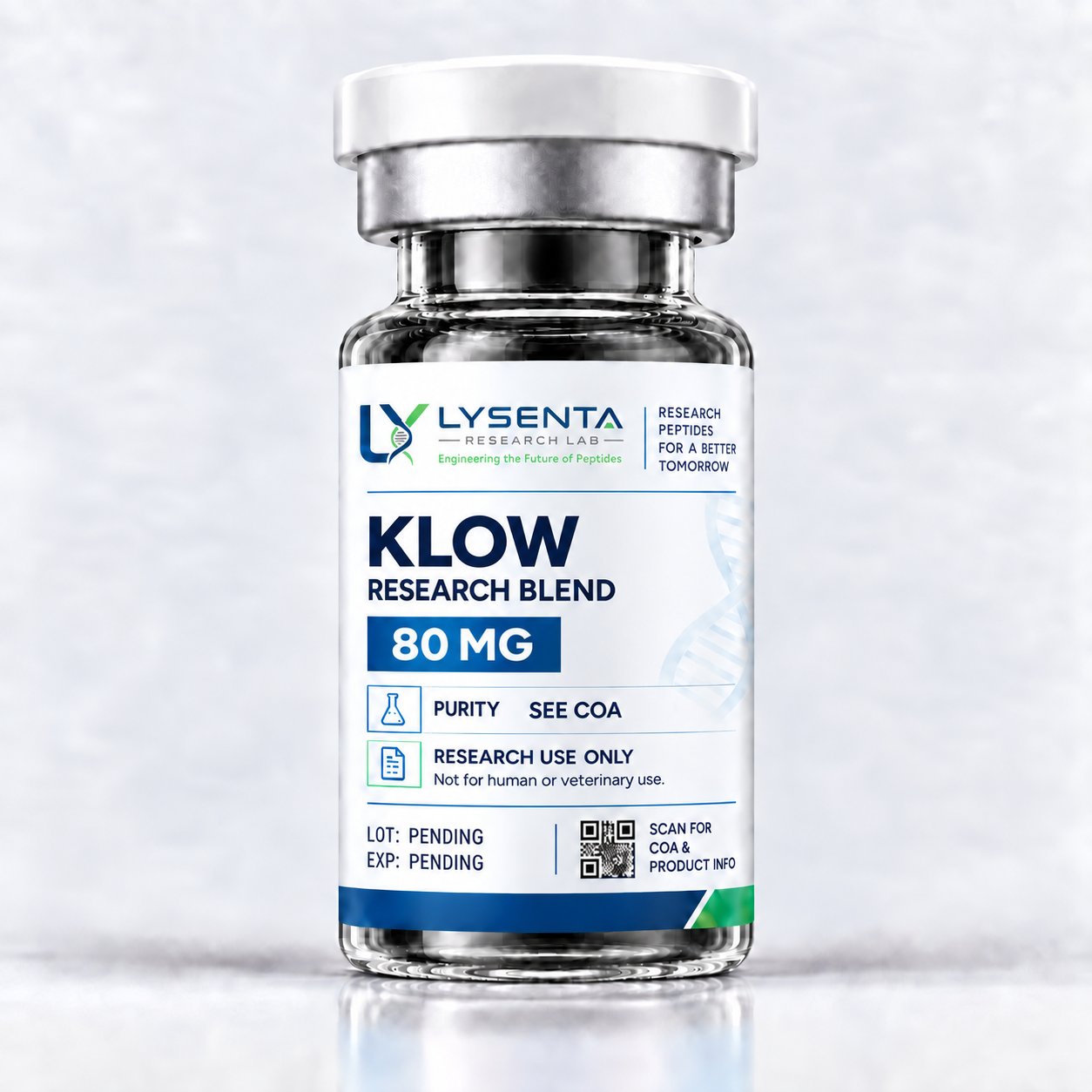
Distinguish GHK-Cu from GHK, AHK-Cu and blended products. Similar names and colour are not sufficient identity checks. The chemical form described in the documentation should match the material required for the experiment; do not infer the copper content or peptide content from a photograph.
When reviewing GHK-Cu documents, ask how identity and copper-related composition were characterized, and what the stated purity result actually measures. Match the SKU and lot before comparing results. A chromatographic area percentage and the mass of peptide present are different measurements and should not be substituted for each other.

No. Their peptide names identify different sequences. Use the compound specified by the research protocol and verify it against the supplied documentation.
No. Appearance is not an analytical identity or purity test. Review the documented methods and results for the supplied batch.
No. This listing is for laboratory research material. Published cell studies do not convert it into a finished cosmetic or establish safety for personal use.
Sources describe the materials and conditions studied by their authors. They are not endorsements of LYSENTA or certificates for the products on this website.
Related does not mean interchangeable. Check composition and evidence separately.
Browse all research and documentation guides →
For laboratory research only. Not for human or animal use. No clinical dosing, treatment or administration advice is provided.